Build Business Relationships Before You Need Them | Leading Wellg Post
Build Relationships Before You Need Them
Have you ever received a message from someone you haven't heard from in years and known before you even finished reading the first sentence that they wanted something?
Maybe they needed an introduction. They wanted you to share something. They were launching a new business and suddenly remembered that the two of you used to know each other. Or perhaps the message started with, "It's been way too long!" and three sentences later you discovered there was a reason they decided today was the day to reconnect.
There's nothing inherently wrong with asking people for help. We all need help sometimes, and I'm incredibly grateful for relationships where we can ask one another for introductions, advice, resources, or support.
However, here's a big difference between asking something of a relationship and only having a relationship because you want to ask for something. People can feel the difference. That's one of the reasons I believe so strongly in building relationships before we know what they're going to do for us.

Relationships Aren't an Emergency Business Strategy
When business slows down, one of the first pieces of advice people give is, "You need to start networking."
They're probably right. I wish, however, that we didn't wait until we needed clients to decide relationships were important. If the only time we're interested in meeting people is when our pipeline is empty, it's very difficult to approach every conversation without an agenda. We're sitting across from someone while wondering, Could she refer me? Does she need to work with me? How quickly can I get to the part where I tell her what I sell?
That's not relationship building.
There is a place for prospecting. There is a place for selling. I'm a sales coach — I certainly don't think we should be afraid to ask people to buy things, and I don't think we should confuse sales activity with relationships.
The best business relationships I've had weren't created because I sat down and calculated what another person might eventually be worth to my business. They grew because we spent time together. We talked. We helped one another. We stayed connected and over time trust developed.
Sometimes business came from those relationships. Sometimes it didn't. The relationship still mattered either way.
Paul Didn't Build Anything Alone
When we think about the Apostle Paul, it's easy to picture this incredibly bold, independent leader traveling from city to city preaching the gospel.
But read through Acts and Paul's letters and something else becomes obvious: Paul had people everywhere.
Barnabas advocated for him when the disciples were afraid to trust him. Priscilla and Aquila worked alongside him. Lydia opened her home. Timothy became a trusted partner. Phoebe served the church and was entrusted with Paul's letter to the Romans. Onesiphorus encouraged him. Epaphroditus ministered to his needs. Churches supported his ministry, and people carried his messages across enormous distances.
Paul had a mission, but he also had relationships.
I find that incredibly encouraging because sometimes we treat independence like it's a leadership virtue. We celebrate the person who built everything herself, figured everything out herself, and didn't need anyone's help.
I'm not convinced that's the biblical picture of leadership.
Throughout Scripture, God accomplishes extraordinary things through relationships between people. One person has an opportunity another person doesn't have. Someone opens a door. Someone offers encouragement. Someone provides resources. Someone sees something the other person can't see.
We need one another. That isn't weakness. That's how community works.
You Usually Don't Know Which Relationships Will Matter
I think this is where business owners sometimes get networking wrong. We want to know whether a relationship is "valuable" before we've even had the chance to know the person.
I've had conversations that seemed completely ordinary at the time and became incredibly important years later. I've also met people I thought would surely lead to an opportunity, and nothing ever came from it.
You just don't know.
That's why I don't think we should walk into rooms ranking people based on what we think they can do for us.
The woman who doesn't look like your ideal client may eventually introduce you to someone who becomes your biggest client. The person who's brand-new in business today may be leading a significant company five years from now. The woman you encourage during a difficult season may become someone who encourages you when you're walking through one of your own.
Or none of that may happen. She may simply become your friend. That's still valuable.
When every relationship has to justify itself financially, we miss a lot of what makes relationships meaningful in the first place.
Jesus Didn't Treat People According to Their Usefulness
Jesus' relationships continually challenge the way our culture thinks about influence.
He noticed people others ignored. He stopped for people who couldn't advance His status. He ate with people who damaged His reputation rather than improved it. He welcomed children when His disciples thought they were an interruption. He spoke with a Samaritan woman when cultural convention said He shouldn't. He saw Zacchaeus in a tree when everyone else saw a tax collector they despised.
Jesus wasn't networking, obviously. I don't want to reduce His ministry to a business lesson, but again, there are big lessons to be learned. The way He saw people should absolutely influence the way we as Christian women in business see people.
Mark 12:31 tells us to love our neighbor as ourselves. That command doesn't change when we walk into a business meeting.
The person standing in front of me has value before I know what she does, who she knows, how much money she makes, or whether she'll ever be able to help my business.
If my faith doesn't change the way I see people, I'm not sure how much it matters that I call myself a Christian business owner.
Meeting someone is easy. Stewarding the introduction well is what gives a relationship the opportunity to grow.
I’ve started thinking about introductions differently. When God places someone in my path, I don’t want my first thought to be, What could come from this? I want to pay attention to the person in front of me. Maybe there will eventually be a business opportunity. Maybe I’ll be able to help her. Maybe she’ll introduce me to someone. Maybe we’ll become friends. Or maybe our paths crossed for a reason I’ll never completely understand.
I don't think we're responsible for turning every introduction into something. We are responsible for how we steward the people and opportunities God places in front of us.
That means listening when someone is talking instead of waiting for my turn to speak. It means remembering what matters to her. It means doing what I said I would do. It means being willing to encourage, connect, or serve without immediately calculating what I might get in return. Sometimes it simply means being present enough to recognize that the conversation matters.
Jesus said in Luke 16:10, “Whoever can be trusted with very little can also be trusted with much.” He was teaching about faithfulness and stewardship, but I think that principle reaches into our relationships too. We often ask God for more—more clients, more opportunities, more influence, more connections—without stopping to consider how we're stewarding the people He's already placed around us.
Not every introduction will become a lasting relationship, and it shouldn't. But when we approach people as relationships to steward rather than contacts to collect, we give something meaningful the opportunity to grow.
And sometimes the relationship that looks insignificant today becomes one of the most important relationships in your life or business years from now. You just don't know yet. That's why you steward the introduction well.
This Is Why I Believe in Getting Around the Table Regularly
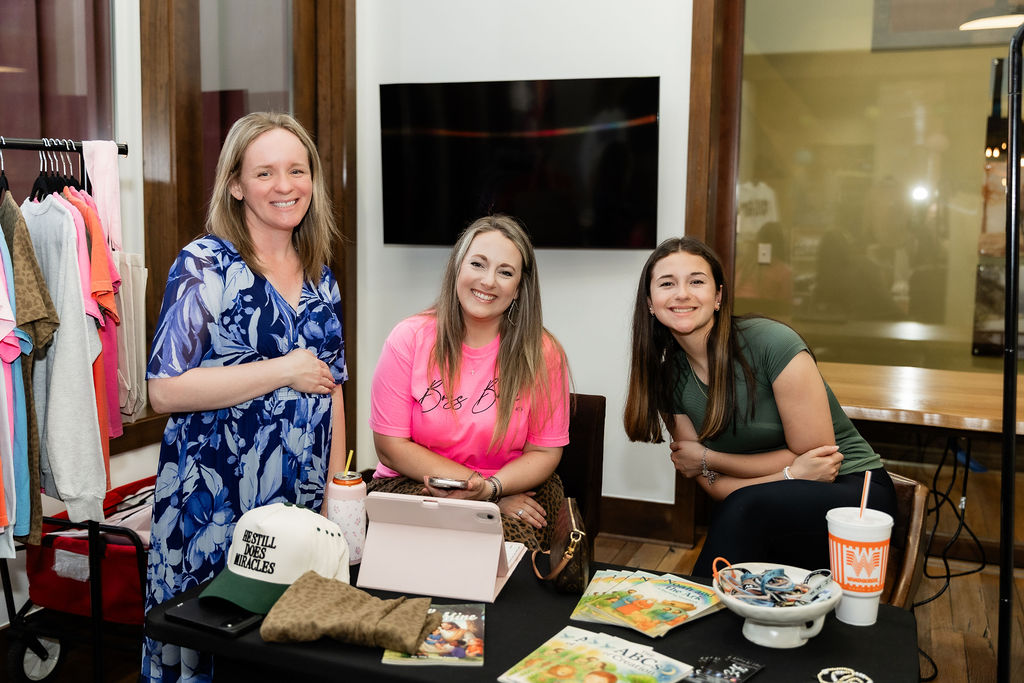
One of the things I love about The Leaders' Table is that we're not trying to create relationships in one meeting.
A woman may visit for the first time and meet someone interesting. The next month, they see each other again. Eventually they have coffee. Another conversation happens. Someone makes an introduction. They discover they have something in common outside of business.
Over time, people become known. That's where community begins.
I don't want women leaving our meetings with the biggest stack of business cards. I want them leaving with relationships they actually want to continue. Those relationships may eventually lead to referrals, collaborations, clients, ideas, partnerships, or opportunities none of us can predict today.
We don't have to manufacture those outcomes. We can build relationships and allow opportunities to grow from them.
Don't Wait Until You Need the Room
If your business is thriving right now, build relationships.
If your calendar is full, build relationships.
If you don't need another client this month, build relationships.
If you're so busy that networking feels like something you could easily remove from your calendar, be careful. There may come a season when things change.
A client leaves. An industry shifts. You launch something new. You need advice. You need an introduction. You need someone who knows an answer you don't. Or maybe business is fantastic, but you're carrying something personally and need women around you who know you well enough to notice.
That's not the moment you want to realize you've spent years building a business without building relationships.
Ecclesiastes 4:9–10 tells us, "Two are better than one, because they have a good return for their labor: If either of them falls down, one can help the other up."
We tend to focus on the part about falling, but the relationship of the two existed before the fall. That's the part I don't want us to miss.
Leadership Reflection
Think about the relationships surrounding your business right now. If you stopped selling tomorrow, how many of those relationships would remain? Who do you know well enough to call when you need perspective, not just business? Who knows what's happening in your life beyond your latest offer? Who are you investing in even though there's nothing obvious for you to gain?
And perhaps the harder question is this: When was the last time you reached out to someone simply because you cared about her, not because you needed something?
If it's been a while, don't turn this into another task for your to-do list. Just think of one person. Then pick up the phone and call her.
Leading Well
Business gives us a lot of reasons to think transactionally. We measure leads, conversion rates, revenue, return on investment, and dozens of other numbers that help us make good decisions.
People don't fit neatly into those spreadsheets if we are stewarding relationships well.
As Christian women in business, I believe we're called to see relationships differently. We can be intentional without being transactional. We can build profitable businesses while still caring about people who may never contribute a dollar to them. We can ask for introductions when appropriate, sell confidently when there's an opportunity, and still recognize that a person's value has nothing to do with what she can give us.
Build the relationships before you need them because people are worth knowing now.
That's part of leading well.
Pull Up a Chair
If you've realized that you need more meaningful business relationships — not simply more names in your phone — I'd love for you to experience The Leaders' Table in North Houston.
It's a community for Christian women in business who want to know one another, encourage one another, talk honestly about leadership and business, and build relationships that grow stronger over time.
We don't know what every relationship around the Table will become. That's part of what makes it exciting.
More Than Networking. A Place to Be Sharpened.
Come as our guest and pull up a chair.
Frequently Asked Questions
Why are relationships important in business?
Strong business relationships create trust, perspective, support, and opportunities that transactions alone cannot provide. Over time, genuine relationships may lead to referrals, collaborations, introductions, friendships, and other opportunities, but their value extends beyond the business they generate.
How is relationship-based networking different from traditional networking?
Relationship-based networking focuses on genuinely knowing and investing in people rather than treating each interaction primarily as a lead-generation opportunity. Business may result from those relationships, but immediate business isn't the measure of whether the conversation was worthwhile.
What does the Bible say about relationships in business?
The Bible doesn't give us a modern networking strategy, but Scripture consistently emphasizes community, service, generosity, wise counsel, hospitality, and caring for others. Christian business owners can allow those principles to shape how they approach professional relationships.
Why should I network when my business is already busy?
A strong network isn't only valuable when you need clients. Relationships can provide wisdom, encouragement, introductions, collaboration, perspective, and community throughout every season of business. Waiting until you urgently need something can make networking feel transactional rather than relational.
Related Scripture
Ecclesiastes 4:9–12 — Two are better than one, and relationships provide strength and support when difficulties come.
Acts 9:26–28 — Barnabas advocates for Paul when others are afraid to trust him.
Acts 18:1–3, 18–19 — Paul develops a close working and ministry relationship with Priscilla and Aquila.
Acts 16:13–15, 40 — Lydia opens her home and becomes part of the community surrounding Paul's ministry.
Romans 16:1–16 — Paul's greetings reveal the extensive network of people who served, worked, sacrificed, and ministered alongside him.
Mark 12:30–31 — Jesus commands us to love God and love our neighbors as ourselves.
Proverbs 17:17 — A friend loves at all times.
Hebrews 10:24–25 — Encouraging one another and continuing to gather together.